The challenge of providing medical training regionally in Australia

Medicine is a heavily regulated field for good reason. Doctors literally work with life and death matters.
To make sure we have the safest and highest quality medical system we can, we have developed a lot of other organisational structures around our doctors.
In Australia the government regulator of healthcare professionals is AHPRA – Australian Health Practitioner Regulation Agency, and for doctors, the Medical Board of Australia. They set all the boundaries ensuring that only the appropriately qualified, trained, and safe people can practice medicine. They set the standards and handle complaints.
There are currently 21 accredited medical schools in Australia. They are accredited by the AMC – Australian Medical Council who ensure the curriculum meets the required standards and that young doctors are getting the appropriate opportunities to learn to be great, safe doctors.
The AMC also provides accreditation to the 16 Medical Colleges who are responsible for specialty training of doctors in Australia and New Zealand. They are responsible for actively ensuring that employers are providing the opportunity and the support for doctors, so they can learn their specialist skills in a safe way.
All this regulation and monitoring of the apprenticeship model of training doctors, in the main, produces doctors who have high quality skills and provide excellent, safe care to their patients.
Such a system can also create, high levels of stress for doctors who are being constantly assessed and measured, for a long time beyond medical school. Junior doctors are competing against their peers for opportunities to learn, beginning with the challenge of getting onto a training specialty pathway with one of the Colleges.
Medical teachers and supervisors, (senior doctors) are constantly weighing up the competing needs of their trainees, patient safety and their own skill maintenance, so it can also be very stressful for them. For example, a trainee Anaesthetist or Obstetrician needs opportunity to perform their technical skills in a theatre to become skilled, so that they can work independently as a specialist. The supervising doctor needs to manage workloads, safety and egos, knowing that the apprentice will be slower initially, that more than one apprentice may need experience with this kind of procedure, and so on.
Health care organisations, especially those in regional centres, desperately seek specialists to work on their staff so that they can provide care locally to patients and so the organisation can be accredited to supervise trainees. Having a trainee specialist in your town increases the number of patients with that problem who can be seen locally. It increases the immediate workforce and gives the organisation a chance to create a pipeline, a succession plan to keep offering that specialty to their community. Only if, there is a specialist accredited to supervise, and only if the specialist is invested in teaching. Without these organisational accreditations doctors cannot learn these skills locally, they have to move, usually back to the city where they attended medical school.
High quality, safe medical care in most countries depends on accreditation and senior doctors teaching junior doctors. This is why many regional areas in Australia have visiting specialists. To have the appropriate opportunity to train, doctors need to be in a metropolitan area, where they are exposed to enough patients in need of their developing expertise, and enough skilled supervision, to learn adequately.
The balancing act of medicine at each level – individual, organisational and community is complex.
If you have medical specialty training in your regional community, it’s so precious. Those senior doctors are generally under a lot of pressure. In my experience at least, they are deeply committed to their community and could do with a lot more support, especially from their employers and their colleges.
Start by booking a call or sending me an email and let’s talk about how you or your team can experience the value and impact of professional coaching.
Recalibrate©
Immersion Development Program for Doctors
Restore Balance and Joy: Build your intra and interpersonal skills.
6 x 1:1 Coaching sessions with Psychologist Coach, Sharee Johnson
24 hrs Masterclasses with a closed group of doctors (max 12)
Develop in ways that will help you reconnect to your purpose.
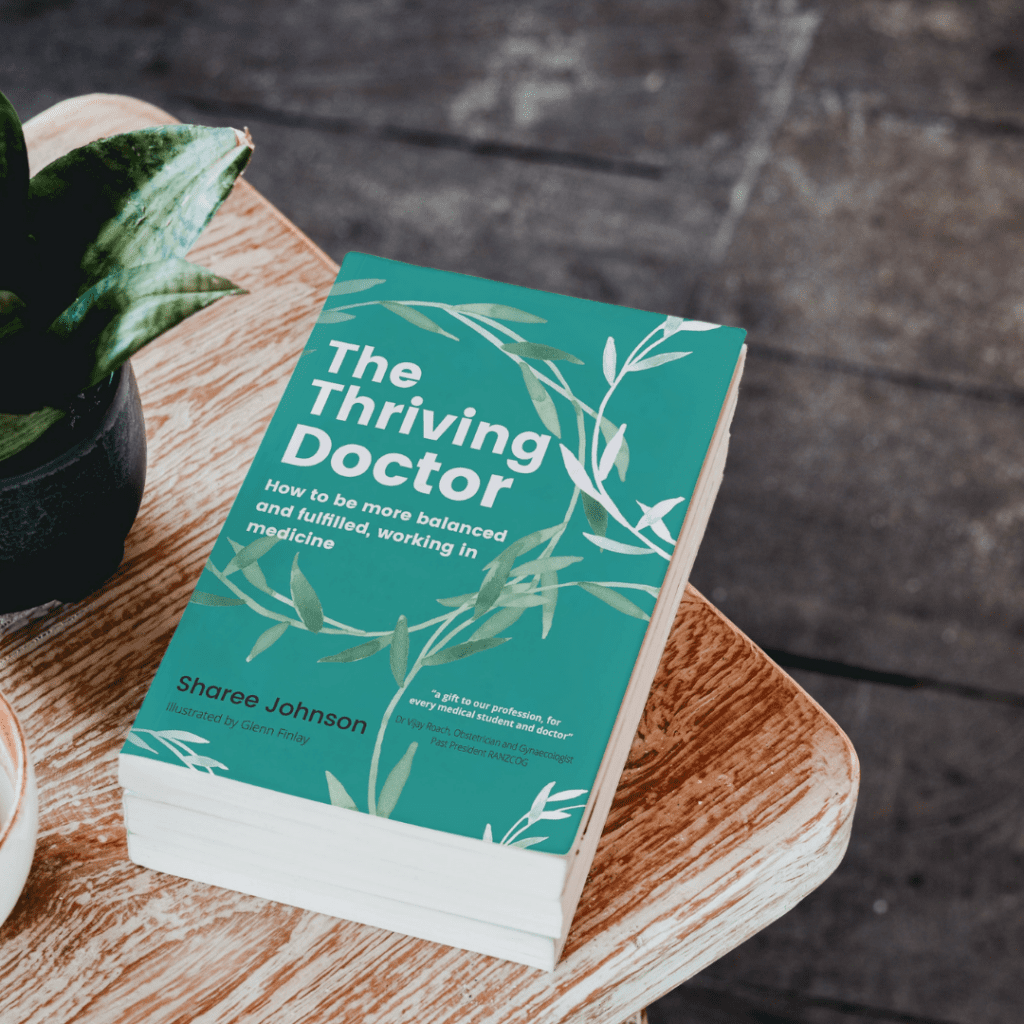
The Thriving Doctor
Sharee Johnson’s book The Thriving Doctor is available in all good bookstores or online.
Sharee has been coaching doctors since 2014, find out more about her work